
Inspired by the book Life: A User’s Manual by Georges Perec, Hans de Wit explores how different artists respond to the idea of a house, specifically a villa composed of multiple rooms, as a framework for examining domestication and notions of home. In Life: A User’s Manual, Perec famously describes 99 of the 100 rooms in a large apartment building on the fictional Rue Simon-Crubellier in Paris. Moving from room to room, he meticulously maps the interior world of the building, cataloguing not only the physical objects within each space but also the lives that have unfolded there: the inhabitants, their dreams, desires, and the ebb and flow of their (mis)fortunes.
Hans de Wit translates this same fascination with detail, slowness, and precision into his curatorial approach. He brings together artists whose practices verge on the absurd and who share an interest in dissecting, reconstructing, and reinterpreting reality. Much like Perec’s methodical literary structure, their works unravel the layers of domestic space, transforming the familiar into something strange, analytical, and richly imaginative.
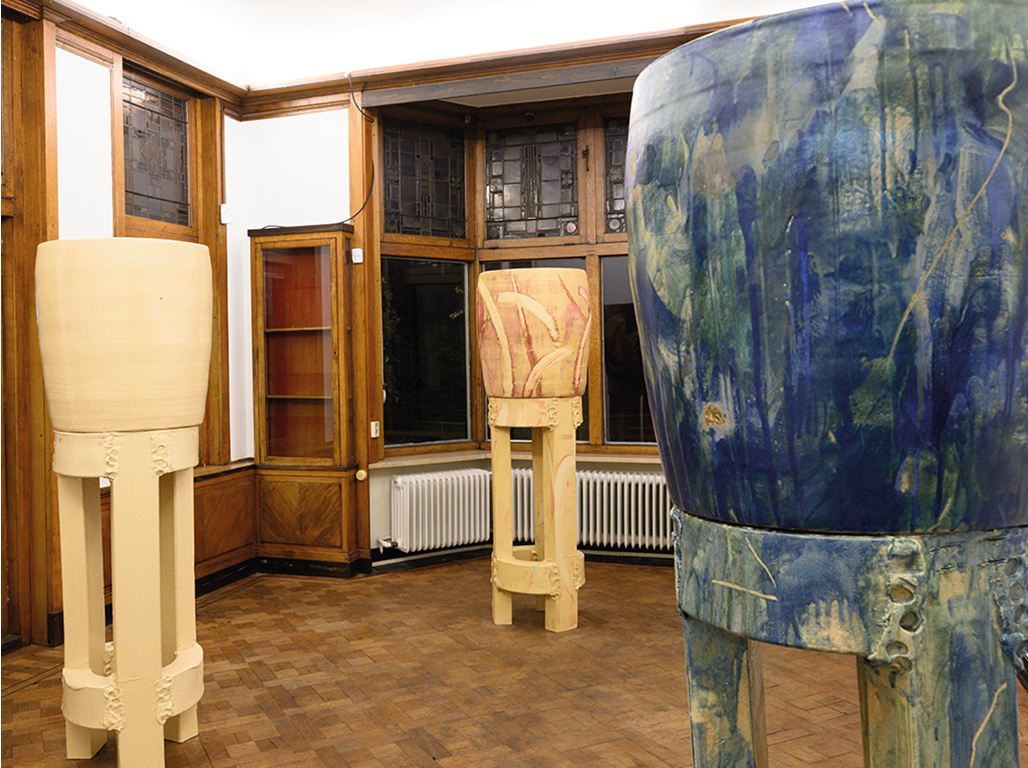
Breukers is convinced that art helps to balance human lives, and that life, in turn, allows art to become human and true. Through sculpture, installation, and collage, the artist seeks to establish new meaningful connections between material, a situation, and the self. Key elements in this process include scale, humor, narrative, and the interplay between artistic techniques and improvised solutions. This approach is reflected in several projects. Following a work period at the European Ceramic Work Centre in 2020, Maria Schneider, curator at Museum De Pont, observed that the artist’s sculptures contained more clay, more layers, and more story than ever before, yet this had made them lighter rather than heavier. During the lockdown, the artist created sculptures in the square of their neighborhood in Amsterdam. A year later, in Curaçao, they engaged with the local culture and community through the tradition of recycling tin cans, known as “Blekero.”
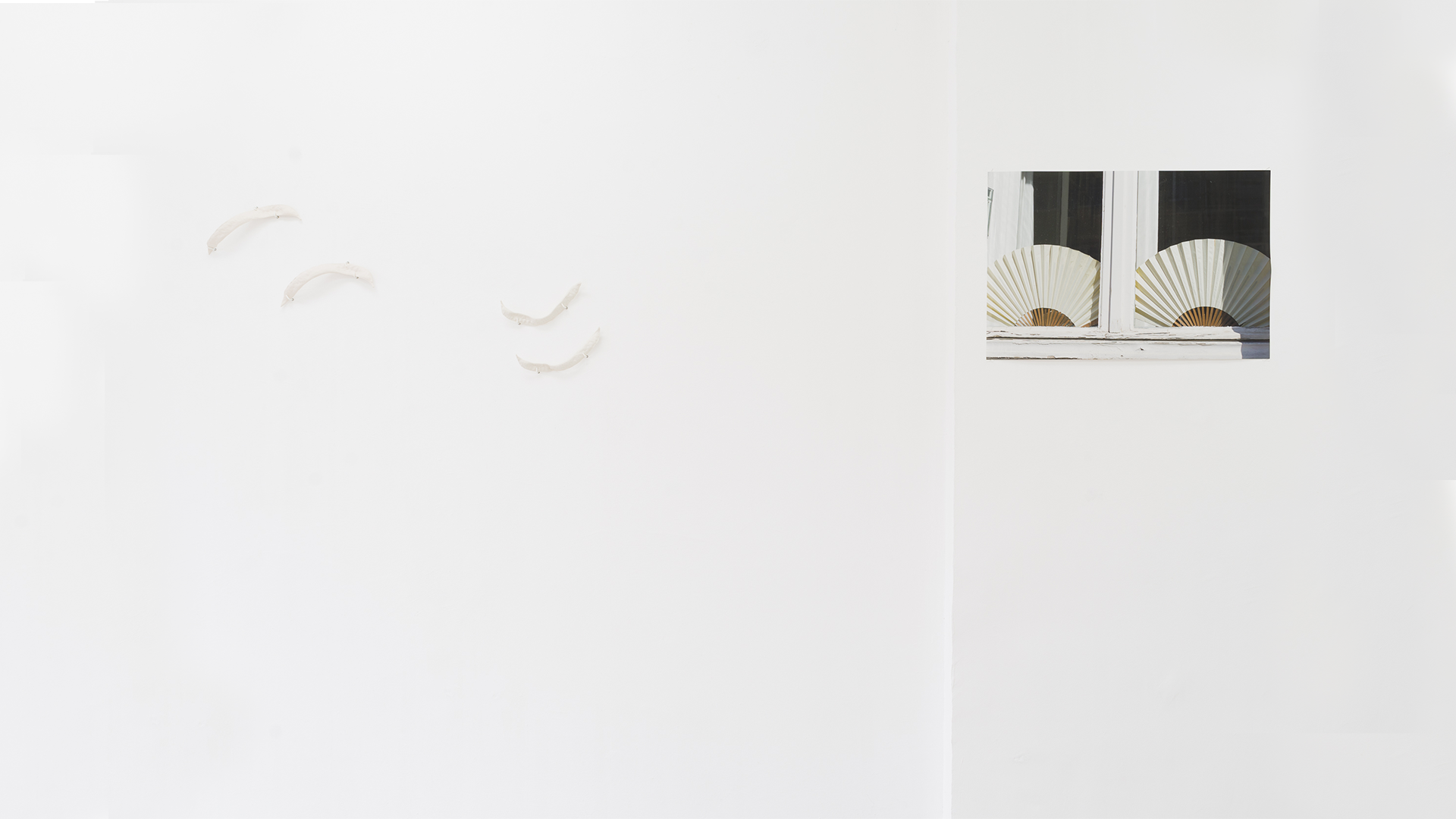
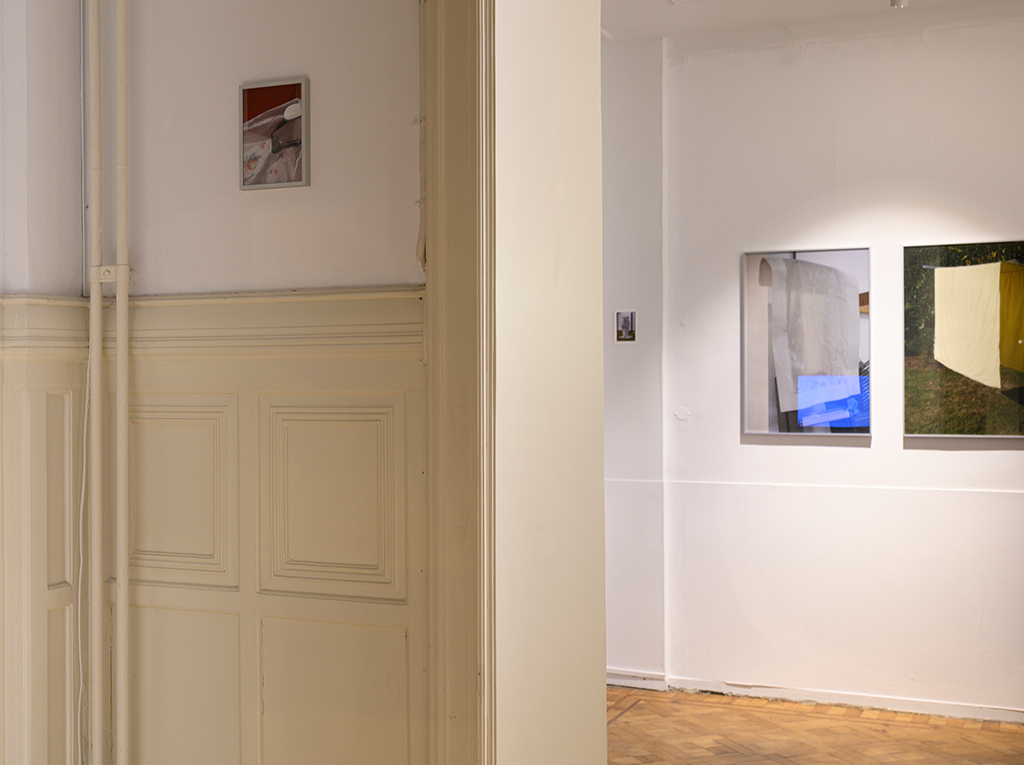
The multimedia practice of Jolijn van den Heuvel stems from “being on the move”, a journey that can take her to a familiar street around the corner or to new, unknown places. Van den Heuvel is primarily concerned with wandering, exploring and experiencing these environments. She sees the nature of everyday life and the reciprocity of our presence in the world as her greatest source of inspiration, often at the boundary where nature and culture meet. Through her work, she attempts to examine, question and explore her own sensitivity to her surroundings and the way she is drawn to the everyday things that surround her. In doing so, she explores the intertwining of her personal history with historical and social patterns. She tries to show us the interconnectedness of the things around us, but also their complexity. Behind the precision with which she works and the clarity of her works, there is also an incongruity. It is often exactly what it seems, but in an incomparable way, it is indeterminate. An important condition for much of her work is that it emphasises a delay or a temporal aspect, both formally and technically, as well as in terms of content. Her camera functions as a navigational tool to analyse the environment of which she is a part. In doing so she searches for images in which she can emphasise subtle poetic or rhythmic details, such as snapshots of repetitive, slow or meditative movements – objects or actions. In addition, she collects physical material, often animal or natural found objects. Fascinated by their form, materiality or history, these artefacts serve as a source for her ceramic works.
For De Kamers, Kuipers designed a room that presents a multitude of possible rooms. Based on a developing theory of spaces, the work begins from the premise that every environment or architectural space corresponds to a mental space, can influence the human mind, and/or has the potential to open up a mental space. In this view, it becomes possible to “design spaces that aim to create mental spaces.” The 31st issue of the personal artist magazine z\w\a\r\t magazine will be published in a small edition as part of the installation.
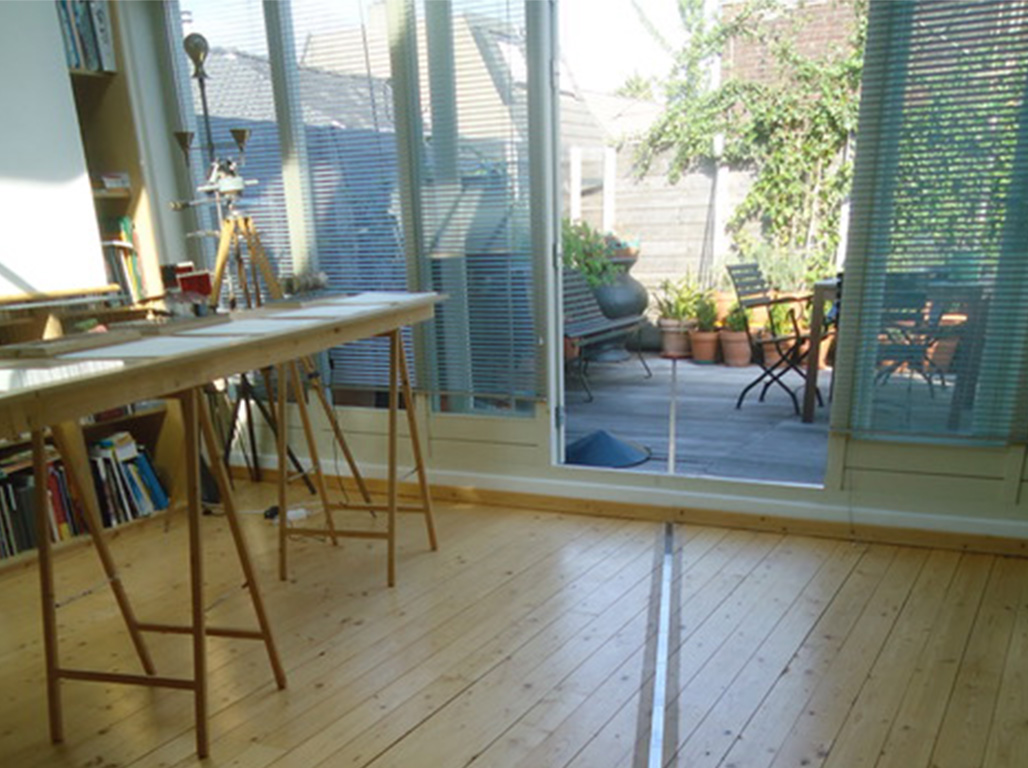
The working table in the centre of my studio is located at the northern latitude of 51°34’12”. The project consists of an increasing series of drawings and models, starting at the Greenwich prime meridian and shifting one degree eastward at a time. After 360 drawings and models, the first turn is complete. GPS, in combination with satellites, enables precise positioning and detailed images of the Earth’s surface. These images are the starting point for the project, whose design is similar to diary entries. In addition to this virtual journey, physical journeys have become part of the project. All but one of the places where the line crosses from land to sea have been visited. These locations are documented in various ways in the form of objects found on site, a herbarium, books, photographs and videos. The models and drawings in the Van Abbehuis show part of the journey that takes place in the North Pacific Ocean. Due to plans for deep-sea mining in this area, references to chemical elements can be seen in the work. The exhibition is complemented by works from an earlier project, The Periodic Table of Elements.
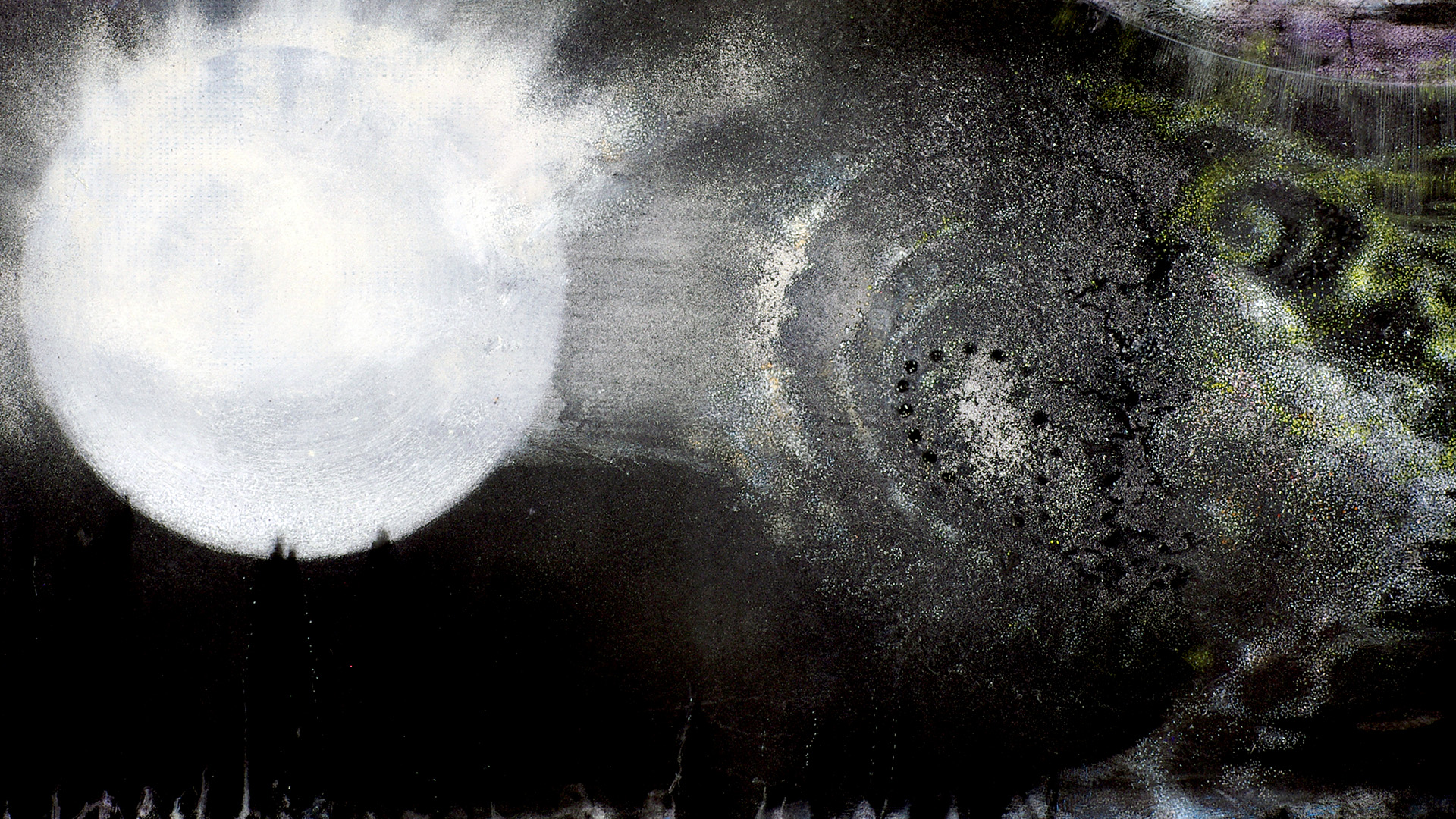
Using pencil, pastel, charcoal and toner, working from a grid, Hans de Wit creates complex worlds on paper. His often imposing drawings show compositions of structures, winding cables, prickly plants, birds, snails, wasp nests, insect-like tentacles and weapons. They bear witness to an imaginary world hidden behind observable reality. The atmospheric use of light and the plastic representation of various objects immediately draw the viewer “in”. Nevertheless, the strange proportions and countless details demand patience: the longer you look, the more you discover. The shadowy imagery is ominous, and a melancholic longing is combined with an atmosphere of transience, in which living and artificial elements merge. Meanings are not revealed. De Wit creates a dimension entirely of his own, with a somewhat dark vision of the future in which humans still occupy little space. “Hearing and seeing perish”.
Bilderdijklaan 19
5611 NG Eindhoven
www.vanabbehuis.nl
Open
Thu–Sun 13:00–17:00
Curated by
Hans de Wit
14 Dec 2025, 16:00
Opening & Reading Performance
by Frank Eerhart
7 Jan 2026, 19:30
Work Presentation by Hans Vijgen
Sound Performance by Max Kuiper
14 Jan 2026, 19:30
Performance by
Tom America & Paul Bogaers
21 Jan 2026, 19:30
Lecture by Manus Groenen
followed by a musical piece
by Hans de Wit
1 Feb 2026, 15:00
Finissage & Reading Performance
by Richard Vijgen
14 Dec 2025, 16:00
Opening & Reading Performance
by Frank Eerhart
7 Jan 2026, 19:30
Work Presentation by Hans Vijgen
Sound Performance by Max Kuiper
14 Jan 2026, 19:30
Performance by
Tom America & Paul Bogaers
21 Jan 2026, 19:30
Lecture by Manus Groenen
followed by a musical piece
by Hans de Wit
1 Feb 2026, 15:00
Finissage & Reading Performance
by Richard Vijgen
Inspired by the book Life: A User’s Manual by Georges Perec, Hans de Wit explores how different artists respond to the idea of a house, specifically a villa composed of multiple rooms, as a framework for examining domestication and notions of home. In Life: A User’s Manual, Perec famously describes 99 of the 100 rooms in a large apartment building on the fictional Rue Simon-Crubellier in Paris. Moving from room to room, he meticulously maps the interior world of the building, cataloguing not only the physical objects within each space but also the lives that have unfolded there: the inhabitants, their dreams, desires, and the ebb and flow of their (mis)fortunes.
Hans de Wit translates this same fascination with detail, slowness, and precision into his curatorial approach. He brings together artists whose practices verge on the absurd and who share an interest in dissecting, reconstructing, and reinterpreting reality. Much like Perec’s methodical literary structure, their works unravel the layers of domestic space, transforming the familiar into something strange, analytical, and richly imaginative.
Breukers is convinced that art helps to balance human lives, and that life, in turn, allows art to become human and true. Through sculpture, installation, and collage, the artist seeks to establish new meaningful connections between material, a situation, and the self. Key elements in this process include scale, humor, narrative, and the interplay between artistic techniques and improvised solutions. This approach is reflected in several projects. Following a work period at the European Ceramic Work Centre in 2020, Maria Schneider, curator at Museum De Pont, observed that the artist’s sculptures contained more clay, more layers, and more story than ever before, yet this had made them lighter rather than heavier. During the lockdown, the artist created sculptures in the square of their neighborhood in Amsterdam. A year later, in Curaçao, they engaged with the local culture and community through the tradition of recycling tin cans, known as “Blekero.”
The multimedia practice of Jolijn van den Heuvel stems from “being on the move”, a journey that can take her to a familiar street around the corner or to new, unknown places. Van den Heuvel is primarily concerned with wandering, exploring and experiencing these environments. She sees the nature of everyday life and the reciprocity of our presence in the world as her greatest source of inspiration, often at the boundary where nature and culture meet. Through her work, she attempts to examine, question and explore her own sensitivity to her surroundings and the way she is drawn to the everyday things that surround her. In doing so, she explores the intertwining of her personal history with historical and social patterns. She tries to show us the interconnectedness of the things around us, but also their complexity. Behind the precision with which she works and the clarity of her works, there is also an incongruity. It is often exactly what it seems, but in an incomparable way, it is indeterminate. An important condition for much of her work is that it emphasises a delay or a temporal aspect, both formally and technically, as well as in terms of content. Her camera functions as a navigational tool to analyse the environment of which she is a part. In doing so she searches for images in which she can emphasise subtle poetic or rhythmic details, such as snapshots of repetitive, slow or meditative movements – objects or actions. In addition, she collects physical material, often animal or natural found objects. Fascinated by their form, materiality or history, these artefacts serve as a source for her ceramic works.
For De Kamers, Kuipers designed a room that presents a multitude of possible rooms. Based on a developing theory of spaces, the work begins from the premise that every environment or architectural space corresponds to a mental space, can influence the human mind, and/or has the potential to open up a mental space. In this view, it becomes possible to “design spaces that aim to create mental spaces.” The 31st issue of the personal artist magazine z\w\a\r\t magazine will be published in a small edition as part of the installation.
The working table in the centre of my studio is located at the northern latitude of 51°34’12”. The project consists of an increasing series of drawings and models, starting at the Greenwich prime meridian and shifting one degree eastward at a time. After 360 drawings and models, the first turn is complete. GPS, in combination with satellites, enables precise positioning and detailed images of the Earth’s surface. These images are the starting point for the project, whose design is similar to diary entries. In addition to this virtual journey, physical journeys have become part of the project. All but one of the places where the line crosses from land to sea have been visited. These locations are documented in various ways in the form of objects found on site, a herbarium, books, photographs and videos. The models and drawings in the Van Abbehuis show part of the journey that takes place in the North Pacific Ocean. Due to plans for deep-sea mining in this area, references to chemical elements can be seen in the work. The exhibition is complemented by works from an earlier project, The Periodic Table of Elements.
Using pencil, pastel, charcoal and toner, working from a grid, Hans de Wit creates complex worlds on paper. His often imposing drawings show compositions of structures, winding cables, prickly plants, birds, snails, wasp nests, insect-like tentacles and weapons. They bear witness to an imaginary world hidden behind observable reality. The atmospheric use of light and the plastic representation of various objects immediately draw the viewer “in”. Nevertheless, the strange proportions and countless details demand patience: the longer you look, the more you discover. The shadowy imagery is ominous, and a melancholic longing is combined with an atmosphere of transience, in which living and artificial elements merge. Meanings are not revealed. De Wit creates a dimension entirely of his own, with a somewhat dark vision of the future in which humans still occupy little space. “Hearing and seeing perish”.
Bilderdijklaan 19
5611 NG Eindhoven
www.vanabbehuis.nl
Open
Thu–Sun 13:00–17:00
Curated by
Hans de Wit