
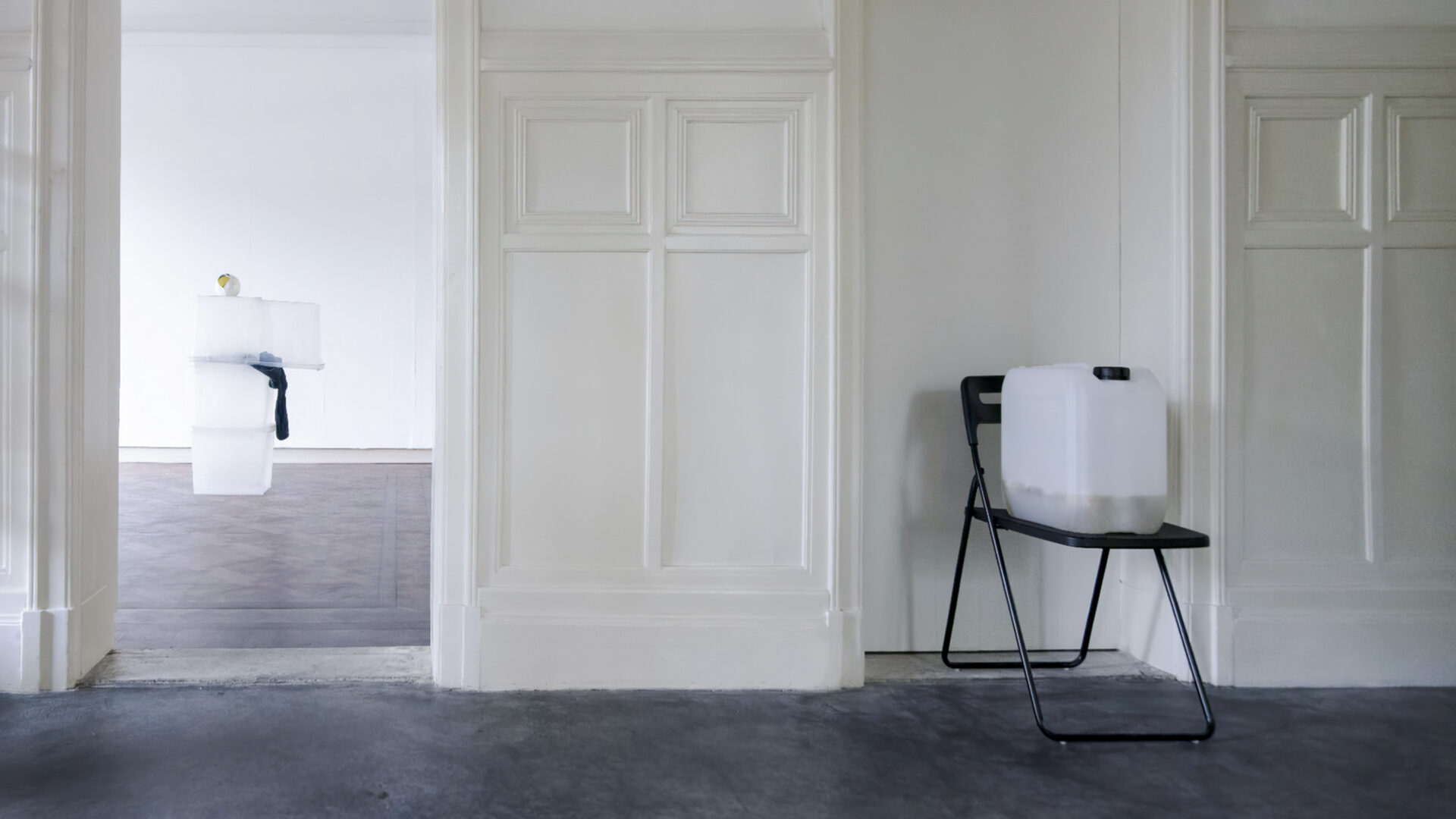
Cem. A, Toon Berg, Mira Dayal, Olivier Goethals, Jan Maaskant, Tom Marioni & Munne
In Van Abbehuis, some works are installed that bring together artists from different centuries. The works remain in place and unfold as an ongoing dialogue, where each piece responds to what came before and influences what follows.
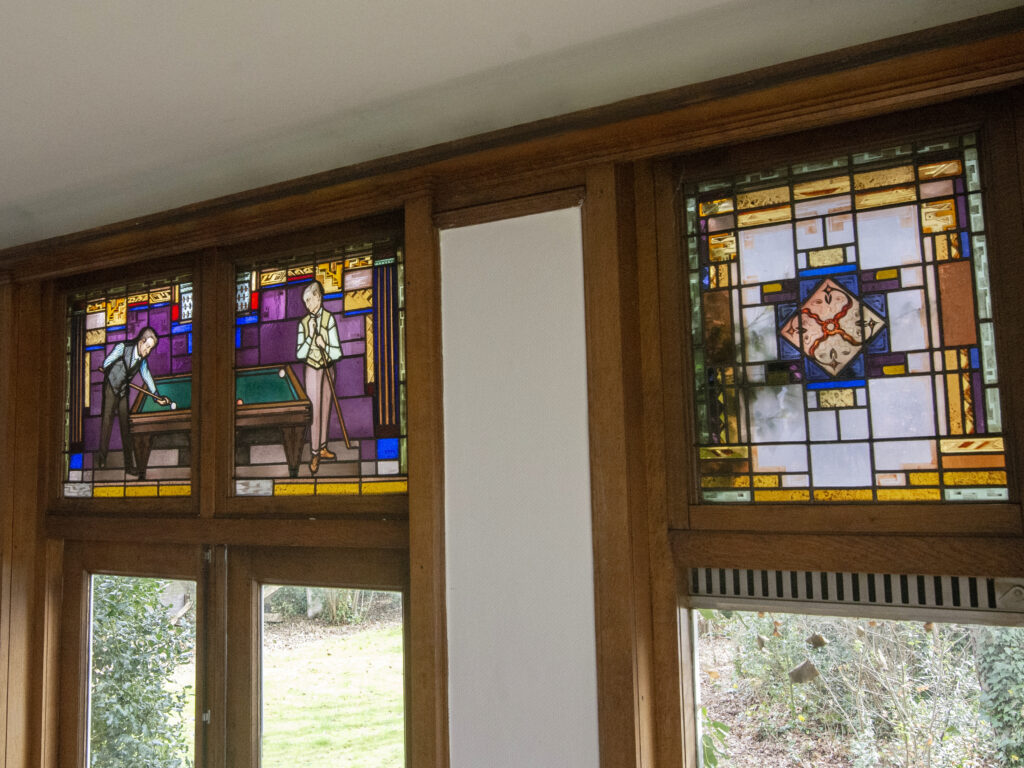
This approach can be traced back to the leaded glass work by Toon Berg, installed in the Billiard room in 1926. Like a house holding traces of its previous inhabitants, Van Abbehuis carries past stories, gestures, and uses. Each artist leaves something behind, adding ongoing contributions, materials, and forms that move through the building and reappear across the space. The collection accumulates over time and is connected to its history as well as its current context, so that revisiting earlier works is just as important as establishing new projects.
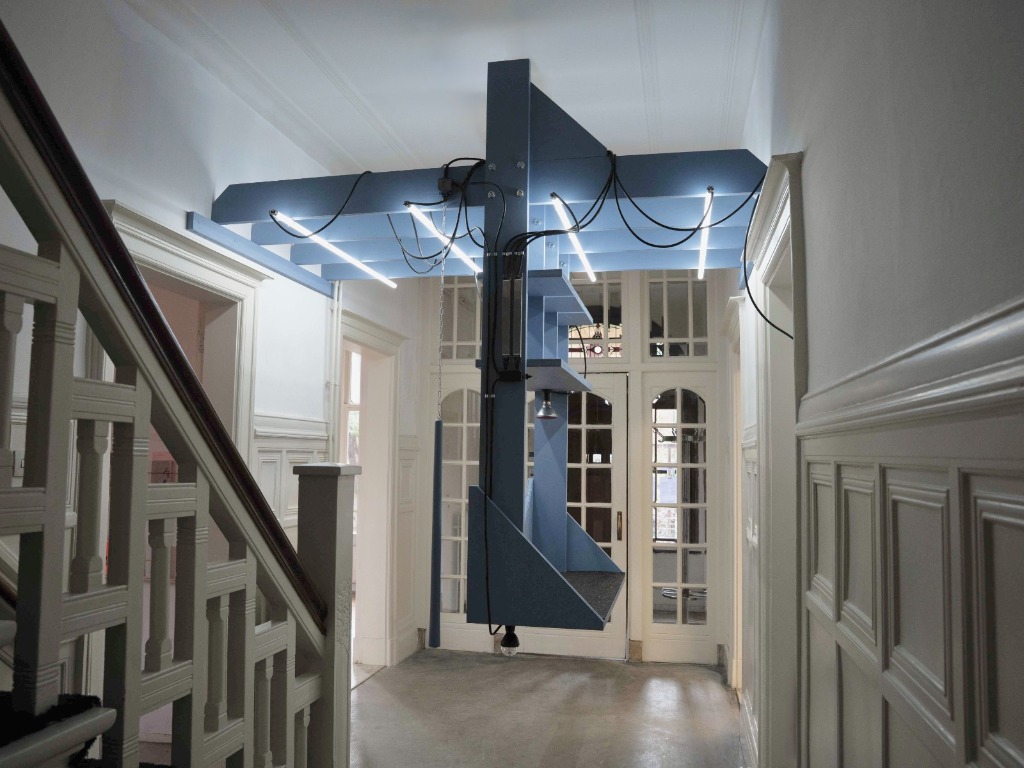
In 2025, Tom Marioni accumulated in this narrative with the work Café Wednesday through his work The Act of Drinking Beer With Friends is the Highest Form of Art. Mira Dayal responded by transforming the concrete floor; and during a benefit weekend, Cem A. installed Angry Peace Flag on the flagpole. In 2026, Olivier Goethals created the installation Duif. Through this work, he makes an intervention that interconnects both the role of the host and the visitor, responding to the historic entrance like a silent host.
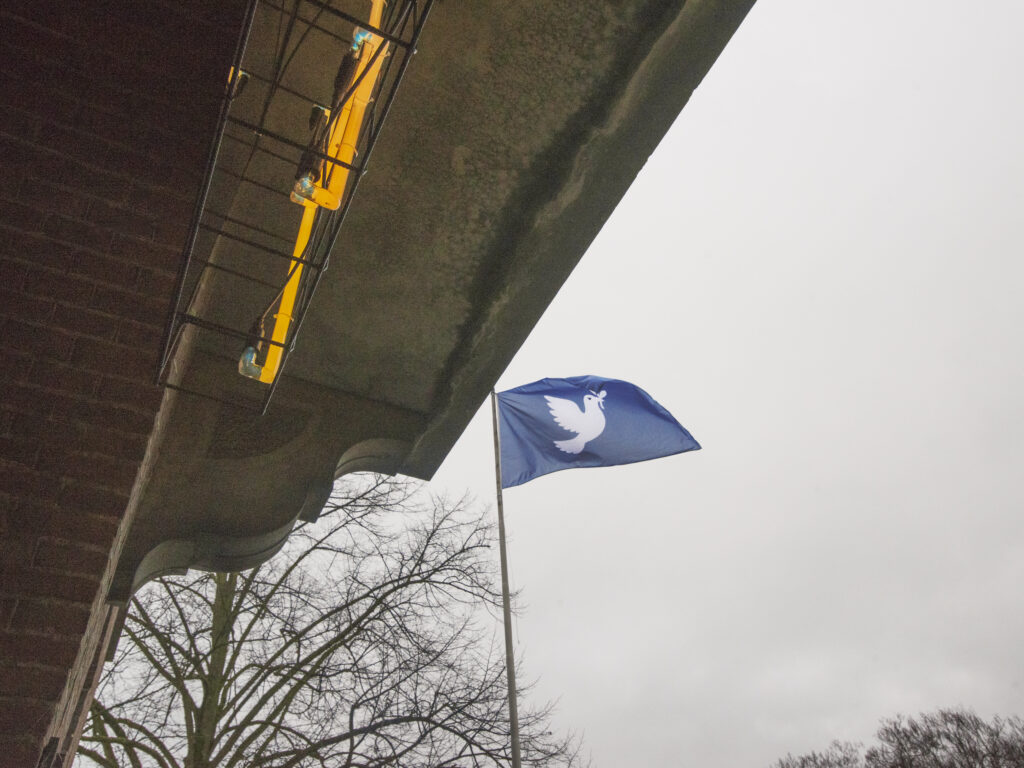
Cem A. is an artist whose practice engages with political symbolism, language, and public gesture. He is known for running the art meme platform Freeze Magazine and for his site-specific installations. His work operates through condensed visual statements that hold tension between conflict and resolution.
Toon Berg was a glass artist (1877–1967, Dordrecht) who created the stained-glass windows of Van Abbehuis. His work includes the figurative window in the Billiard room, which depicts Henri van Abbe alongside another man, possibly Anton Philips, reflecting the social and industrial networks of the period. Berg’s stained-glass practice is embedded in early 20th-century Dutch decorative traditions, where architectural space and image functioned as a unified visual system. The exact dating of some of the windows remains uncertain; stylistically, they align with late Amsterdam School design from the late 1910s, suggesting that some elements may have been reused in later extensions.
Mira Dayal is an artist, writer and editor born in Canada in 1995, whose practice develops sculptural systems that respond to site, architecture, and historical context. Her works often involve subtle, labor-intensive, and sometimes absurd engagements with everyday materials. In Van Abbehuis, her intervention Map 40°43’15.0″N 73°59’05.51″W references and extends a lineage of architectural reworking.
Olivier Goethals is an artist and architect, born in 1980 in Belgium, whose practice explores the relationship between space and consciousness. His work often investigates how spatial design, perception, and movement shape human awareness and experience.
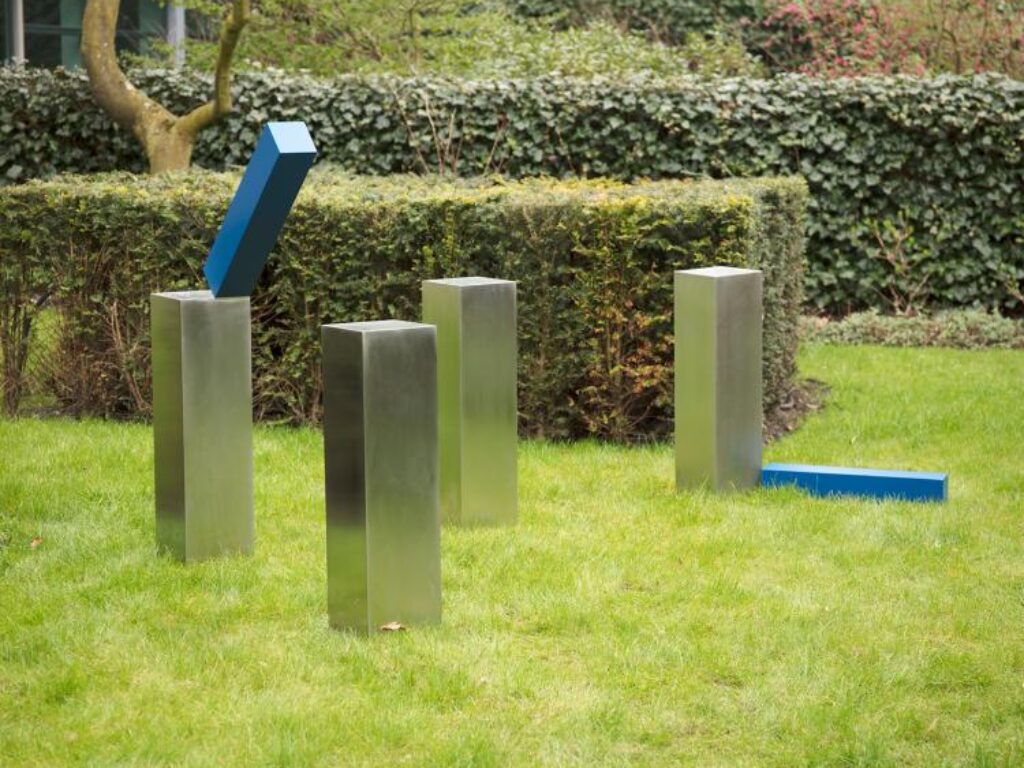
Johannes Albertus (Jan) Maaskant is a sculptor and draftsman born in 1939 in the Netherlands. A self-taught artist, he moved from compact sculptural forms toward open compositions made of independent elements, where scale, distance, direction, and arrangement play a central role. His practice is generally associated with geometric abstraction and explores the relationship between sculpture and architecture through spatial structures and wall reliefs that extend into space.
Tom Marioni is an American artist born in 1937 and a key figure in the development of what later became known as “social art.” His work The Act of Drinking Beer With Friends is the Highest Form of Art underpins his practice, framing social interaction itself as an artistic medium. In Van Abbehuis, his bar installation establishes the gathering space as a work of art in which participation and shared time form the core structure of the work.
Munne is an Eindhoven-based artist and host of platform Rararadio. His practice moves between neon, sound, and spatial intervention, often engaging with conditions of local precarity, branding, and self-initiated platforms.
Bilderdijklaan 19
5611 NG Eindhoven
www.vanabbehuis.nl
Open
Thu–Sun 13:00–17:00
In Van Abbehuis, some works are installed that bring together artists from different centuries. The works remain in place and unfold as an ongoing dialogue, where each piece responds to what came before and influences what follows.
This approach can be traced back to the leaded glass work by Toon Berg, installed in the Billiard room in 1926. Like a house holding traces of its previous inhabitants, Van Abbehuis carries past stories, gestures, and uses. Each artist leaves something behind, adding ongoing contributions, materials, and forms that move through the building and reappear across the space. The collection accumulates over time and is connected to its history as well as its current context, so that revisiting earlier works is just as important as establishing new projects.
In 2025, Tom Marioni accumulated in this narrative with the work Café Wednesday through his work The Act of Drinking Beer With Friends is the Highest Form of Art. Mira Dayal responded by transforming the concrete floor; and during a benefit weekend, Cem A. installed Angry Peace Flag on the flagpole. In 2026, Olivier Goethals created the installation Duif. Through this work, he makes an intervention that interconnects both the role of the host and the visitor, responding to the historic entrance like a silent host.
Cem A. is an artist whose practice engages with political symbolism, language, and public gesture. He is known for running the art meme platform Freeze Magazine and for his site-specific installations. His work operates through condensed visual statements that hold tension between conflict and resolution.
Toon Berg was a glass artist (1877–1967, Dordrecht) who created the stained-glass windows of Van Abbehuis. His work includes the figurative window in the Billiard room, which depicts Henri van Abbe alongside another man, possibly Anton Philips, reflecting the social and industrial networks of the period. Berg’s stained-glass practice is embedded in early 20th-century Dutch decorative traditions, where architectural space and image functioned as a unified visual system. The exact dating of some of the windows remains uncertain; stylistically, they align with late Amsterdam School design from the late 1910s, suggesting that some elements may have been reused in later extensions.
Mira Dayal is an artist, writer and editor born in Canada in 1995, whose practice develops sculptural systems that respond to site, architecture, and historical context. Her works often involve subtle, labor-intensive, and sometimes absurd engagements with everyday materials. In Van Abbehuis, her intervention Map 40°43’15.0″N 73°59’05.51″W references and extends a lineage of architectural reworking.
Olivier Goethals is an artist and architect, born in 1980 in Belgium, whose practice explores the relationship between space and consciousness. His work often investigates how spatial design, perception, and movement shape human awareness and experience.
Johannes Albertus (Jan) Maaskant is a sculptor and draftsman born in 1939 in the Netherlands. A self-taught artist, he moved from compact sculptural forms toward open compositions made of independent elements, where scale, distance, direction, and arrangement play a central role. His practice is generally associated with geometric abstraction and explores the relationship between sculpture and architecture through spatial structures and wall reliefs that extend into space.
Tom Marioni is an American artist born in 1937 and a key figure in the development of what later became known as “social art.” His work The Act of Drinking Beer With Friends is the Highest Form of Art underpins his practice, framing social interaction itself as an artistic medium. In Van Abbehuis, his bar installation establishes the gathering space as a work of art in which participation and shared time form the core structure of the work.
Munne is an Eindhoven-based artist and host of platform Rararadio. His practice moves between neon, sound, and spatial intervention, often engaging with conditions of local precarity, branding, and self-initiated platforms.
Bilderdijklaan 19
5611 NG Eindhoven
www.vanabbehuis.nl
Open
Thu–Sun 13:00–17:00