
For a story to be heard, it needs to be told. Who is permitted to tell stories, who feels empowered enough to take the stage to do so and who we trust to tell the ‘true’ story is closely related to their perceived social status. It is through storytelling that there is a power attributed to the teller of the story; they yield the power to define the things, people and events they speak about. It is through the narrative generated by these stories that our perception of the object of the story can be altered. It is through the marginalization of people that we in turn also marginalize voices, reserving our understanding of truth to a singular Western scientific understanding.
The Day It Rains Jellyfish Part III: On re-evaluating value investigates the assignment of social and political value to human beings, and questions its relation to the power hierarchy that is embedded within knowledge production, story telling and truth-building. To go towards a different understanding of value, we need to overthrow the values that are installed upon us by dominant culture and undermine the patterns that shape our understanding of value. Power influences the ways in which we perceive the truth through allowing only those with the most privileged identity to become tellers of truth while rejecting the proposition of alternative stories. By contesting this monopoly in truth-telling, the exhibition proposes to re-assign value as a form of solidarity.
The artists in this exhibition (re-)tell stories about immigration, exotification, classism, colonialism and the rise of far-right politics, in an attempt to undermine the politics of knowledge production that are based on unjust hierarchies within social value. They look at value structures that are both based on real-life tendencies and imagined worlds that are rooted in the patterns of the collective current and past. On re-evaluating value stands for tearing down oppression embedded in contemporary systems and rebuilding our perception of each other and the world though promoting pluriform storytelling and knowledge production.
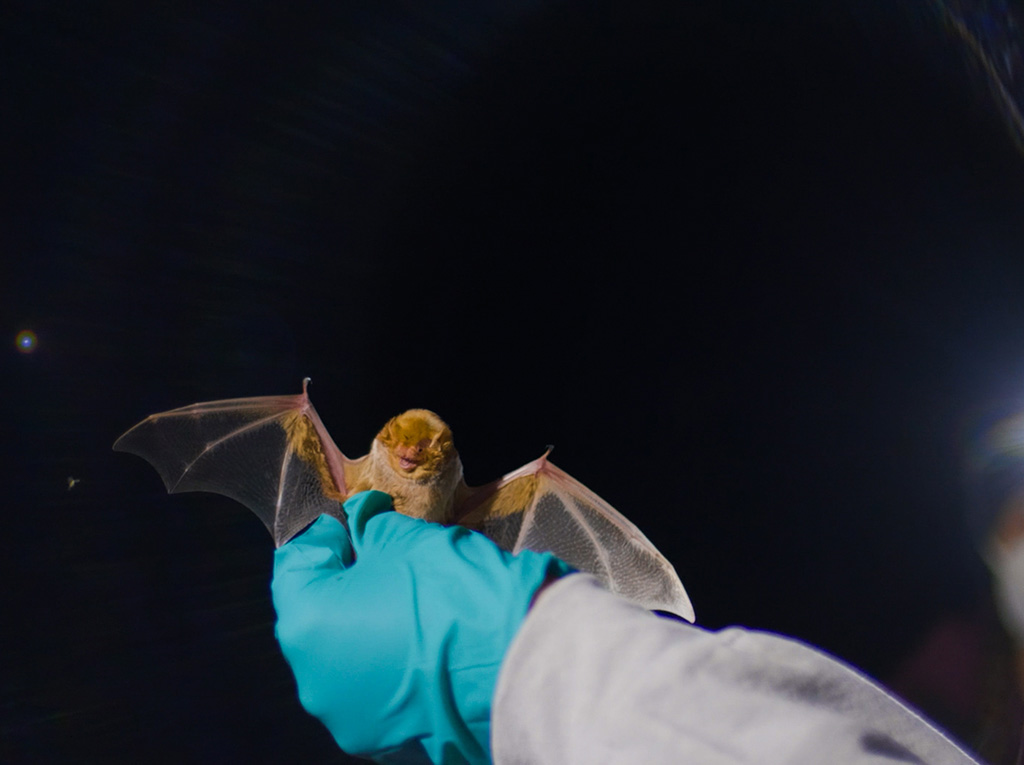
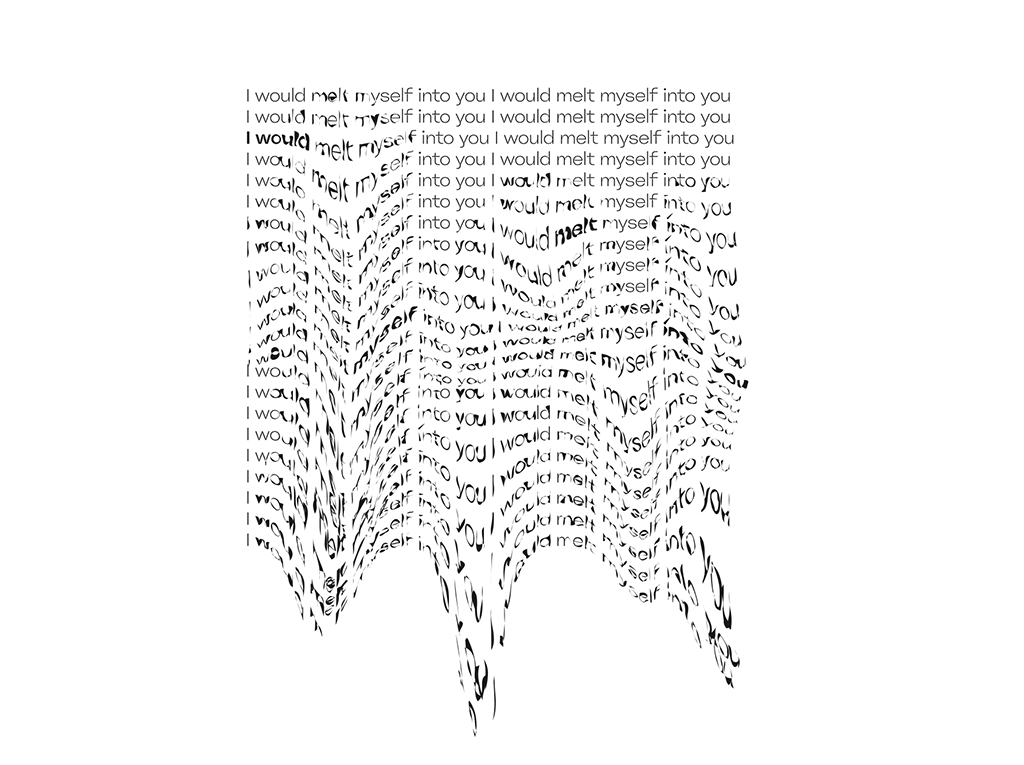
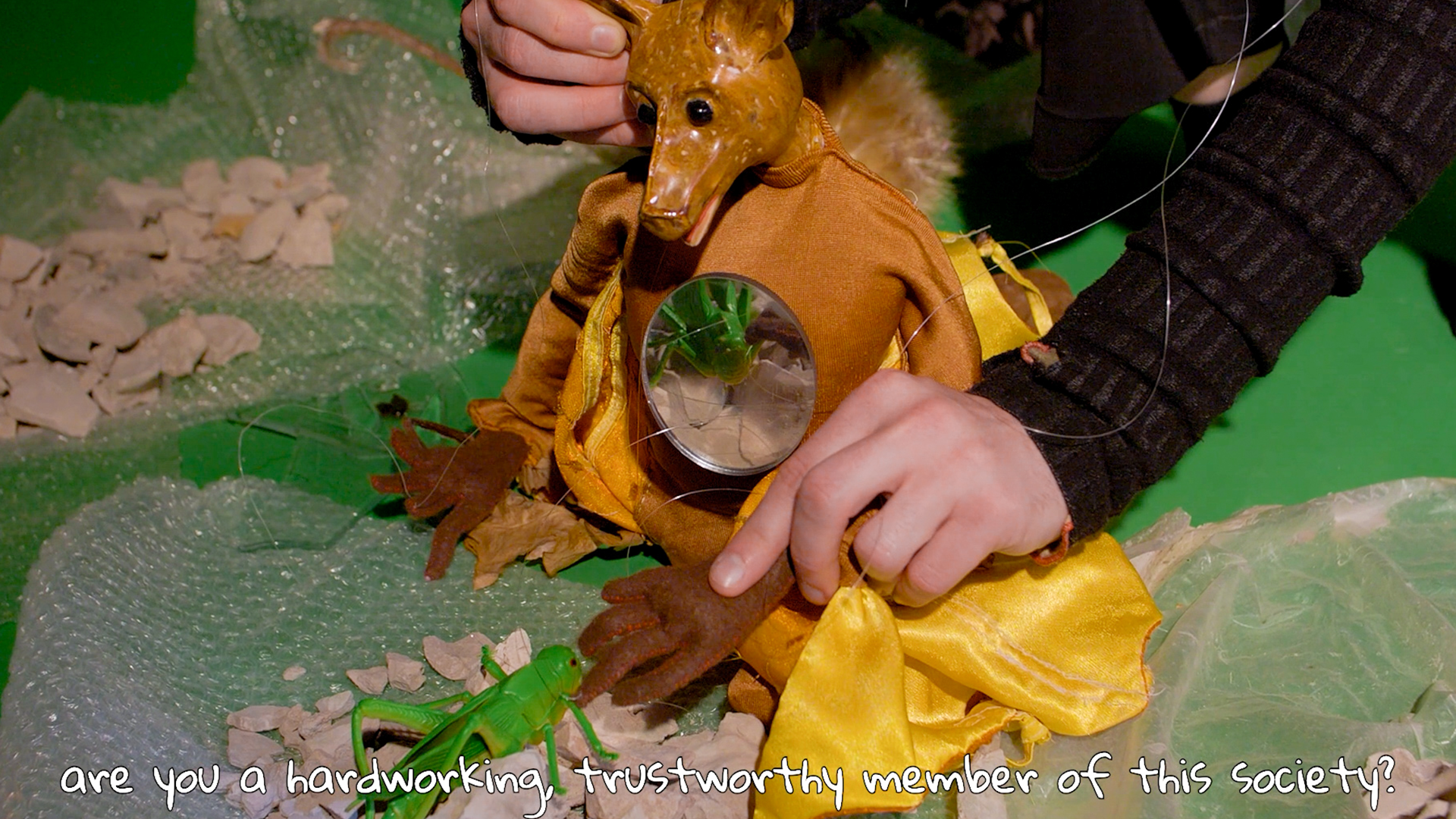
Gabi Dao is an artist from the unceded and ancestral territories of the xʷməθkwəy̓əm, Skwxwú7mesh and Səl̓ílwətaʔ/Selilwitulh Nations (Vancouver, Canada) who has been living in Rotterdam for the past few years. Dao’s practice culminates in collage, sculpture, sound and moving image installations with an insistence on multiple truths, blurry temporalities, sensory affirmations and ways of knowing otherwise. They work through long-gestating, fluid processes of gathering, breaking and repairing from their own world-making vernacular of audio/visual fragments, tactile collections of whatnots and scraps of linguistic detritus. Thinking with these materials, their work often begins within the slippages of ‘history’, archives and storytelling – towards channeling the ineffable tensions between grief and joy, alienation and belonging, dissidence and complicity, disassociation and sentimentality. From this juncture, Dao attempts to reclaim and re-enchant meaning-making from the ruins of capitalism and colonialism, especially in the ways they have extracted from racialized, gendered and more-than-human communities. They have screened and exhibited their work at E-flux Screening Room, Southern Alberta Art Gallery Maansiksikaitsitapiitsinikssin, A Tale of a Tub, The National Gallery of Canada, and Vincom Centre for Contemporary Art. They were recently in residence at Triangle Astérides and the EKWC Oisterwijk.
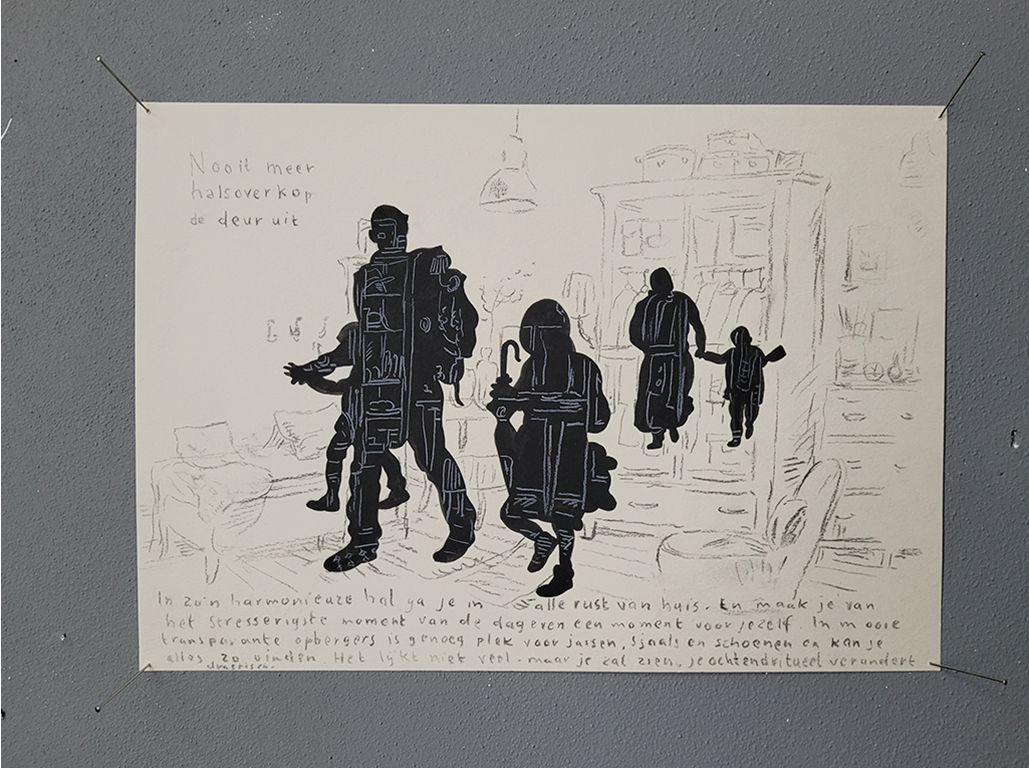
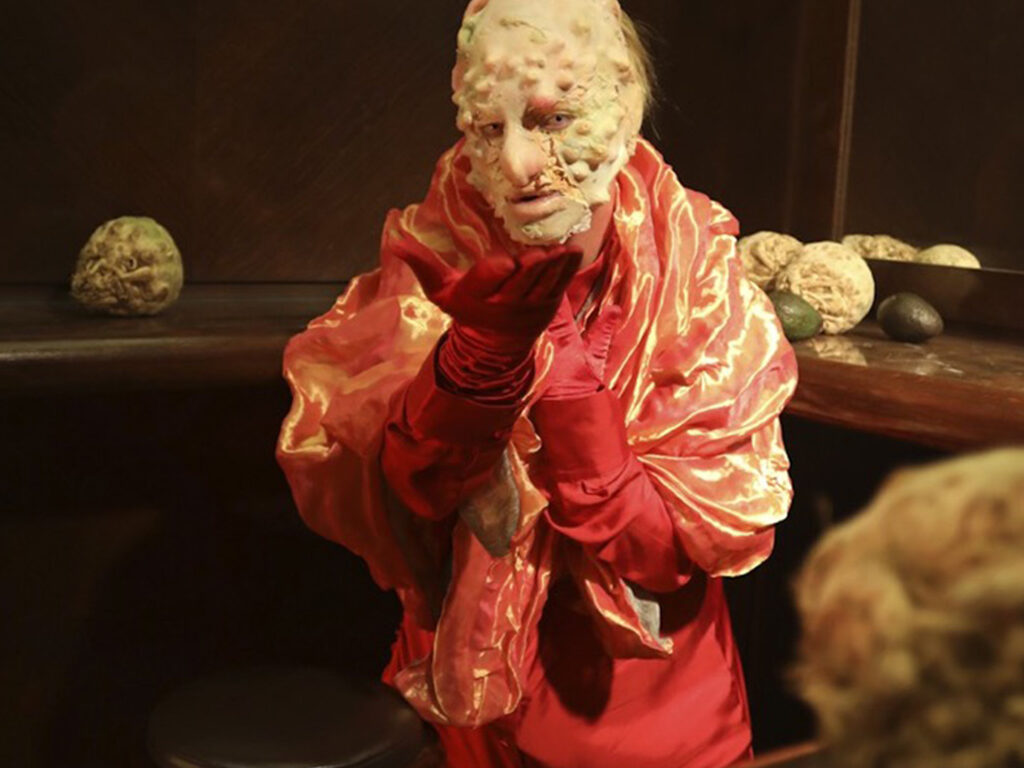
Jakub Jansa is an artist with a distinctive approach to combining film, installation, and performance. Through a nuanced and reflective sensibility, his work raises questions about the mechanisms of social structures and the ideologies shaping them. His exhibition series with the umbrella title Club of Opportunities reflects dynamics of class issues and power hierarchies in a way that is poetic yet intellectually provocative. Work blends fiction, humor, and elements of the grotesque with contemporary leftist theories. He creates imaginative environments that expose the fragile and illusory nature of social systems we live in. Jakub Jansa was selected to represent the Czech and Slovak Pavilion at the 61st Venice Biennale in 2026, which will mark the 100th anniversary of the pavilion’s opening. To commemorate this milestone, the presentation will bring together Jansa, the artist duo Selmeci Kocka Jusko, and curator Peter Sit.
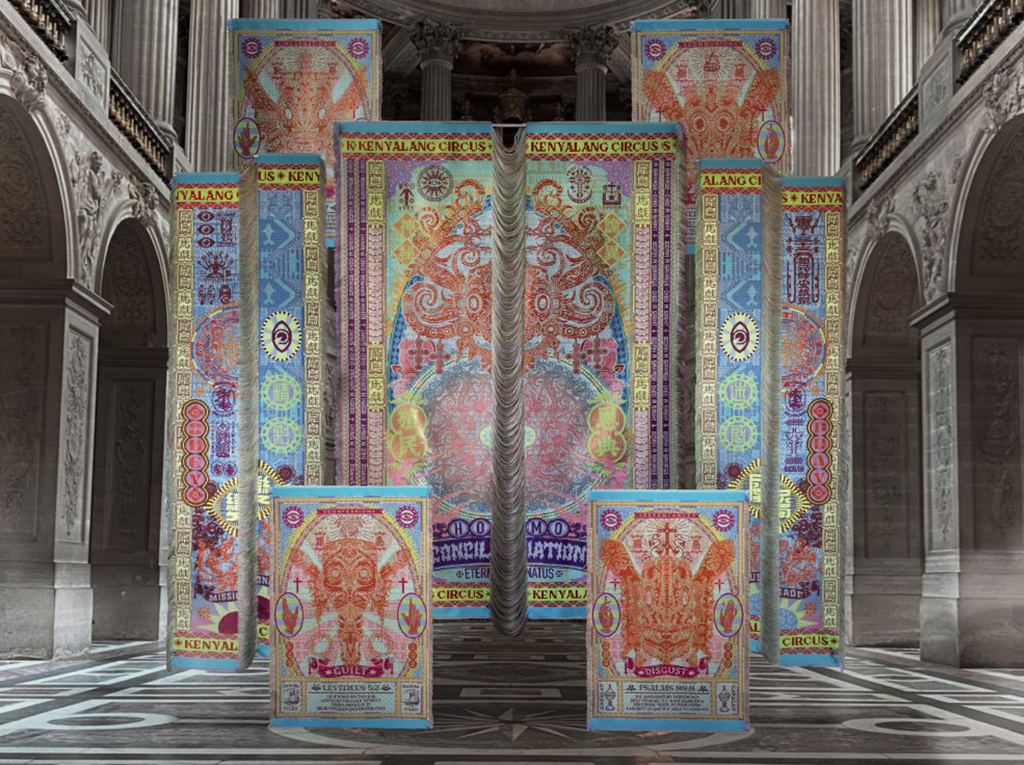
Marcos Kueh is an artist from Sarawak, Borneo Malaysia, currently living and working in the Netherlands. His practice centres on textiles as a medium for storytelling, drawing from Borneo’s ancestral weaving traditions to explore themes of identity, labour, and globalisation. Growing up in a post-colonial developing country, Kueh has long been engaged with questions of identity and how Malaysia is perceived – whether through colonial depictions in museums or stylised narratives in tourism advertising. His work seeks to reconcile these representations with his lived experience growing up in Borneo, navigating the pressures of modernity and globalisation. He uses weaving to encode contemporary legends from everyday life, just as the ancestors of Borneo did with their dreams and stories before the arrival of written alphabets from the West. Kueh holds a Bachelor’s in Graphic and Textile Design from the Royal Academy of Art, The Hague, completed in 2022. That same year, he was awarded the Ron Mandos Young Blood Award, and in 2023 he was named Young Designer of the Year by the Dutch Design Awards. His works are held in the collections of Museum Voorlinden and the Stedelijk Museum Amsterdam. Recent exhibitions include Manifesta 15 in Barcelona; Kunstinstituut Melly in Rotterdam; The Backroom, Kuala Lumpur; and the National Art Gallery Malaysia in Kuala Lumpur.
Mohammed (Moe) Mustafa was born in Kuwait in 1985 to Palestinian parents, brought up in Jordan, and is currently based in Finland. He was selected as TAMK’s Alumnus of the Year 2025, is a visual artist, sound artist and theatre maker who graduated from Tampere University of Applied Sciences in 2018 with a degree in media. In addition to his work in art and theatre, Moe has been honing his skills in sound design and composing for several years. Atheer Soot, an Arabic phrase meaning “a sound that resonates in the void,” is Moe’s music project. It focuses on the interconnection between memories and sound, taking listeners on a journey back in time to explore Moe’s childhood and translate those memories into atmospheric and drone soundscapes. For Moe, the process of sculpting sound is therapeutic, involving a deep dive into the subconscious where mind and intuition are free to wander.
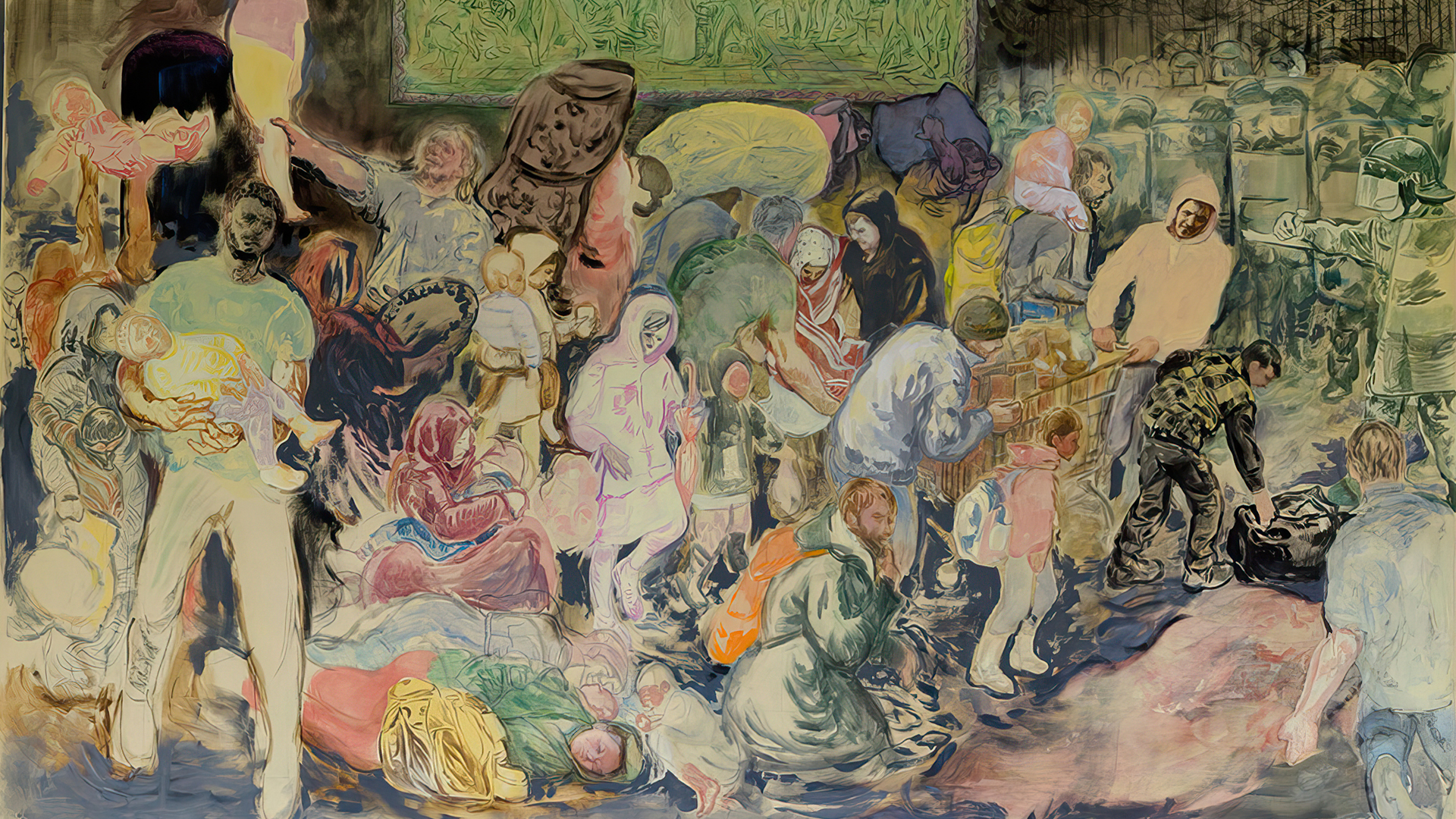
Stijn Peeters was born in 1957 in Valkenswaard. He lives and works in Eindhoven. Peeters is a visual artist, researcher, and educator, and the interplay between these fields forms the foundation of his artistic practice. He is known for his activist drawings and paintings. He is constantly exploring the role that art can play in society. His work has so far been shown in numerous individual and group exhibitiorns, mainly in the Netherlands. In 1992 he was awared the Philip Morris Preis. His works are part of the collection of the Museum van Bommel van Dam in Venlo and the van Abbe Museum Eindhoven. Between 1978 and 1982 Stijn Peeters studied at the Kononklijke Academie voor Kunst en vormgeving ’s Hertogenbosch and between 1985 and 1987 at the Jan van Eyck Academie in Maastricht.
Bilderdijklaan 19
5611 NG Eindhoven
www.vanabbehuis.nl
Open
Thu–Sun 13:00–17:00
Text My Sister is a decentralized platform for contemporary art in North Brabant, led by three curators. We focus on questions of collectivity and connectedness from a pluralistic perspective. Within their program, collective learning is central, and we link this to annually changing focal points, developing the program as a coherent combination of research and public activities. In doing so, they use a working method in which artistic practice, reflection, and knowledge-sharing are closely intertwined.
Program
19:00: Official opening
19:30: Opening speech
19:45: Arab cassette performance by resident Moe Mustafa
20:45: DJ set by XEN
21:15: Rianne Wilbers, co-production in collaboration with De Link
Text My Sister is a decentralized platform for contemporary art in North Brabant, led by three curators. We focus on questions of collectivity and connectedness from a pluralistic perspective. Within their program, collective learning is central, and we link this to annually changing focal points, developing the program as a coherent combination of research and public activities. In doing so, they use a working method in which artistic practice, reflection, and knowledge-sharing are closely intertwined.
Program
19:00: Official opening
19:30: Opening speech
19:45: Arab cassette performance by resident Moe Mustafa
20:45: DJ set by XEN
21:15: Rianne Wilbers, co-production in collaboration with De Link
For a story to be heard, it needs to be told. Who is permitted to tell stories, who feels empowered enough to take the stage to do so and who we trust to tell the ‘true’ story is closely related to their perceived social status. It is through storytelling that there is a power attributed to the teller of the story; they yield the power to define the things, people and events they speak about. It is through the narrative generated by these stories that our perception of the object of the story can be altered. It is through the marginalization of people that we in turn also marginalize voices, reserving our understanding of truth to a singular Western scientific understanding.
The Day It Rains Jellyfish Part III: On re-evaluating value investigates the assignment of social and political value to human beings, and questions its relation to the power hierarchy that is embedded within knowledge production, story telling and truth-building. To go towards a different understanding of value, we need to overthrow the values that are installed upon us by dominant culture and undermine the patterns that shape our understanding of value. Power influences the ways in which we perceive the truth through allowing only those with the most privileged identity to become tellers of truth while rejecting the proposition of alternative stories. By contesting this monopoly in truth-telling, the exhibition proposes to re-assign value as a form of solidarity.
The artists in this exhibition (re-)tell stories about immigration, exotification, classism, colonialism and the rise of far-right politics, in an attempt to undermine the politics of knowledge production that are based on unjust hierarchies within social value. They look at value structures that are both based on real-life tendencies and imagined worlds that are rooted in the patterns of the collective current and past. On re-evaluating value stands for tearing down oppression embedded in contemporary systems and rebuilding our perception of each other and the world though promoting pluriform storytelling and knowledge production.
Gabi Dao is an artist from the unceded and ancestral territories of the xʷməθkwəy̓əm, Skwxwú7mesh and Səl̓ílwətaʔ/Selilwitulh Nations (Vancouver, Canada) who has been living in Rotterdam for the past few years. Dao’s practice culminates in collage, sculpture, sound and moving image installations with an insistence on multiple truths, blurry temporalities, sensory affirmations and ways of knowing otherwise. They work through long-gestating, fluid processes of gathering, breaking and repairing from their own world-making vernacular of audio/visual fragments, tactile collections of whatnots and scraps of linguistic detritus. Thinking with these materials, their work often begins within the slippages of ‘history’, archives and storytelling – towards channeling the ineffable tensions between grief and joy, alienation and belonging, dissidence and complicity, disassociation and sentimentality. From this juncture, Dao attempts to reclaim and re-enchant meaning-making from the ruins of capitalism and colonialism, especially in the ways they have extracted from racialized, gendered and more-than-human communities. They have screened and exhibited their work at E-flux Screening Room, Southern Alberta Art Gallery Maansiksikaitsitapiitsinikssin, A Tale of a Tub, The National Gallery of Canada, and Vincom Centre for Contemporary Art. They were recently in residence at Triangle Astérides and the EKWC Oisterwijk.
Jakub Jansa is an artist with a distinctive approach to combining film, installation, and performance. Through a nuanced and reflective sensibility, his work raises questions about the mechanisms of social structures and the ideologies shaping them. His exhibition series with the umbrella title Club of Opportunities reflects dynamics of class issues and power hierarchies in a way that is poetic yet intellectually provocative. Work blends fiction, humor, and elements of the grotesque with contemporary leftist theories. He creates imaginative environments that expose the fragile and illusory nature of social systems we live in. Jakub Jansa was selected to represent the Czech and Slovak Pavilion at the 61st Venice Biennale in 2026, which will mark the 100th anniversary of the pavilion’s opening. To commemorate this milestone, the presentation will bring together Jansa, the artist duo Selmeci Kocka Jusko, and curator Peter Sit.
Marcos Kueh is an artist from Sarawak, Borneo Malaysia, currently living and working in the Netherlands. His practice centres on textiles as a medium for storytelling, drawing from Borneo’s ancestral weaving traditions to explore themes of identity, labour, and globalisation. Growing up in a post-colonial developing country, Kueh has long been engaged with questions of identity and how Malaysia is perceived – whether through colonial depictions in museums or stylised narratives in tourism advertising. His work seeks to reconcile these representations with his lived experience growing up in Borneo, navigating the pressures of modernity and globalisation. He uses weaving to encode contemporary legends from everyday life, just as the ancestors of Borneo did with their dreams and stories before the arrival of written alphabets from the West. Kueh holds a Bachelor’s in Graphic and Textile Design from the Royal Academy of Art, The Hague, completed in 2022. That same year, he was awarded the Ron Mandos Young Blood Award, and in 2023 he was named Young Designer of the Year by the Dutch Design Awards. His works are held in the collections of Museum Voorlinden and the Stedelijk Museum Amsterdam. Recent exhibitions include Manifesta 15 in Barcelona; Kunstinstituut Melly in Rotterdam; The Backroom, Kuala Lumpur; and the National Art Gallery Malaysia in Kuala Lumpur.
Mohammed (Moe) Mustafa was born in Kuwait in 1985 to Palestinian parents, brought up in Jordan, and is currently based in Finland. He was selected as TAMK’s Alumnus of the Year 2025, is a visual artist, sound artist and theatre maker who graduated from Tampere University of Applied Sciences in 2018 with a degree in media. In addition to his work in art and theatre, Moe has been honing his skills in sound design and composing for several years. Atheer Soot, an Arabic phrase meaning “a sound that resonates in the void,” is Moe’s music project. It focuses on the interconnection between memories and sound, taking listeners on a journey back in time to explore Moe’s childhood and translate those memories into atmospheric and drone soundscapes. For Moe, the process of sculpting sound is therapeutic, involving a deep dive into the subconscious where mind and intuition are free to wander.
Stijn Peeters was born in 1957 in Valkenswaard. He lives and works in Eindhoven. Peeters is a visual artist, researcher, and educator, and the interplay between these fields forms the foundation of his artistic practice. He is known for his activist drawings and paintings. He is constantly exploring the role that art can play in society. His work has so far been shown in numerous individual and group exhibitiorns, mainly in the Netherlands. In 1992 he was awared the Philip Morris Preis. His works are part of the collection of the Museum van Bommel van Dam in Venlo and the van Abbe Museum Eindhoven. Between 1978 and 1982 Stijn Peeters studied at the Kononklijke Academie voor Kunst en vormgeving ’s Hertogenbosch and between 1985 and 1987 at the Jan van Eyck Academie in Maastricht.
Bilderdijklaan 19
5611 NG Eindhoven
www.vanabbehuis.nl
Open
Thu–Sun 13:00–17:00